Athletes sell collectibles directly to the fans who believe in them — keeping 80% of every sale plus a royalty on every resale, forever. AI builds the platform, generates the cards, and runs the scarcity engine. Launching with women's sports, built for every overlooked 18+ athlete. The people who see it first share in what it becomes.
The default model of the NIL economy — football, men's basketball, headline valuations — describes about six percent of the athletes and almost none of the demand. Here's what the rest of it actually looks like.
The platform is built for what the existing infrastructure missed.
Each numbered footnote on this fact sheet maps to a primary or first-party source documented in sources-marketing-site.md. Where a primary source is paywalled or aggregated, the project research chain is cited.
The sports trading-card industry has extracted value from athlete faces for a century. Over $50M in record sales in the last few years alone — not a single dollar back to the athletes or their estates. We don't patch this. We rewrite the protocol.
See how it worksEvery category-defining platform rides a stack of enabling shifts that suddenly compound. Ours just landed.
Every existing NIL platform — Opendorse, NIL Club, the entire collectives ecosystem — facilitates the same model: sponsorship NIL, where a brand pays an athlete for promotional services. NextUp is the first marketplace NIL platform: athletes sell their own collectibles directly to their own fans. Different model. Different category. Both are NIL.
We are not a crypto company. We're a sports collectibles company built on blockchain rails — the way Instagram is built on PostgreSQL. Smart-wallet passkeys, sponsored gas, and contract-layer royalty enforcement on our closed marketplace do the work behind the scenes. The user pays with Apple Pay. The royalty pays the athlete. Forever.
Peter Thiel's $500K into Facebook became $1B. By the time a regular person can buy at IPO, the biggest multiples are gone — by design. Athletic careers follow the same curve, but the believers have always been grandmothers, coaches, and neighbors. We give them structured economic participation in the careers they help make possible.
When Tom Brady was the backup QB at Michigan, his community knew. When Serena was 13 on a public court in Compton, her community knew. When Usain Bolt was running barefoot in Trelawny, his neighbors knew.
The believers were always there. Now they share in what belief creates.
The U.S. women's sports market exhibits a structural inversion: institutional capital flows where consumer demand isn't, and consumer demand has gone unfunded. The marketplace model is the architecture that captures what sponsorship under-prices.
Yet men received approximately 77% of all NIL deals in 2023. The traditional sponsorship market is severely under-pricing the attention-capturing power of female athletes.
Male athlete fan followings are driven primarily by athletic performance — highlight clips, game footage. Frontstage. Female athlete followings are driven significantly by personality, lifestyle, and community — fans follow the person, not solely the performance. Backstage.
Corporate sponsorships need frontstage performance loyalty. Fan-funded collectibles economies are built on backstage personal loyalty — fans who collect, hold, and trade signature moments precisely because the relationship is personal. The mismatch between female athletes and traditional NIL deal flow is not a cultural problem. It is an architectural mismatch. The marketplace model is the architecture that fits.
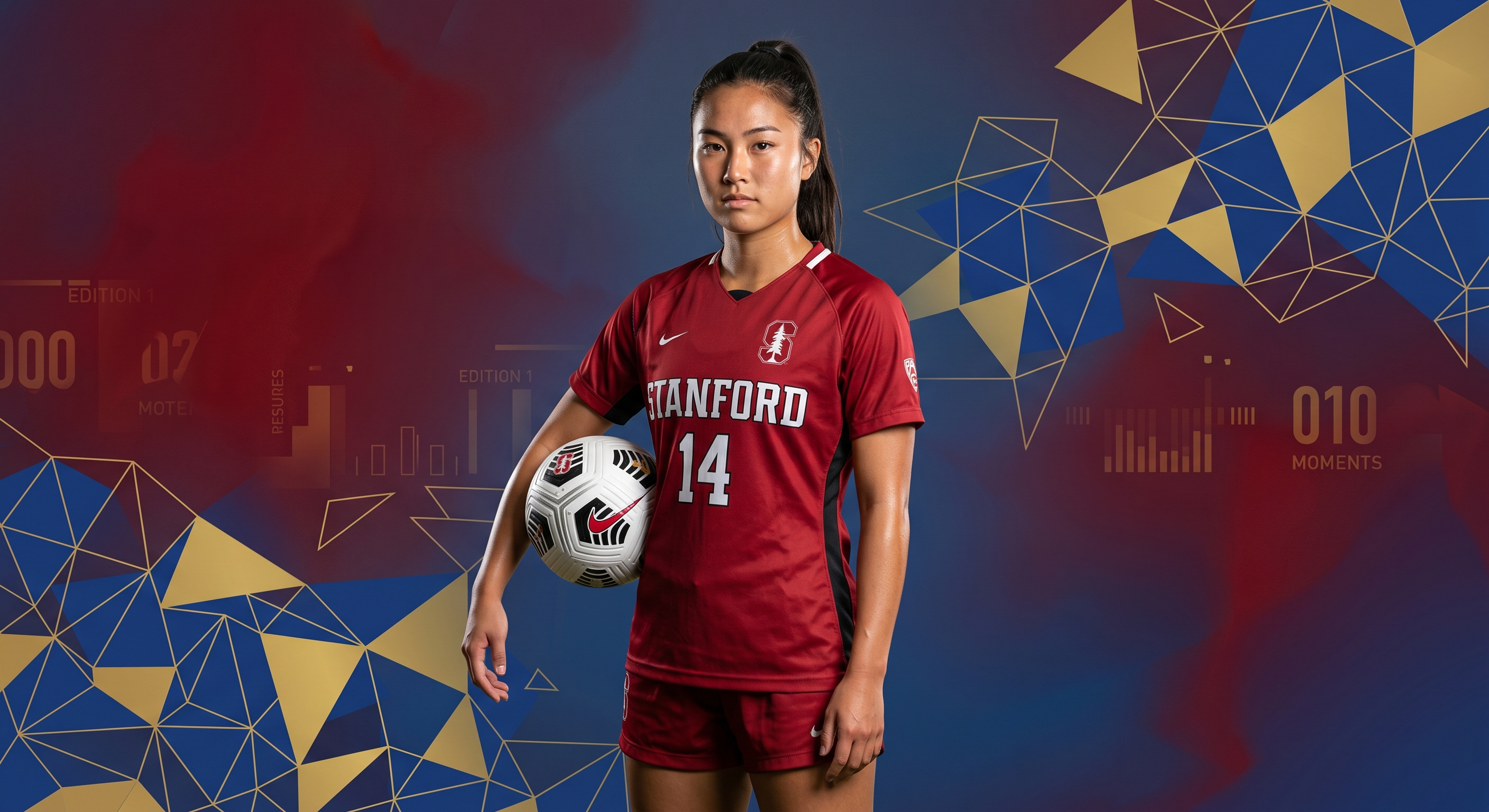
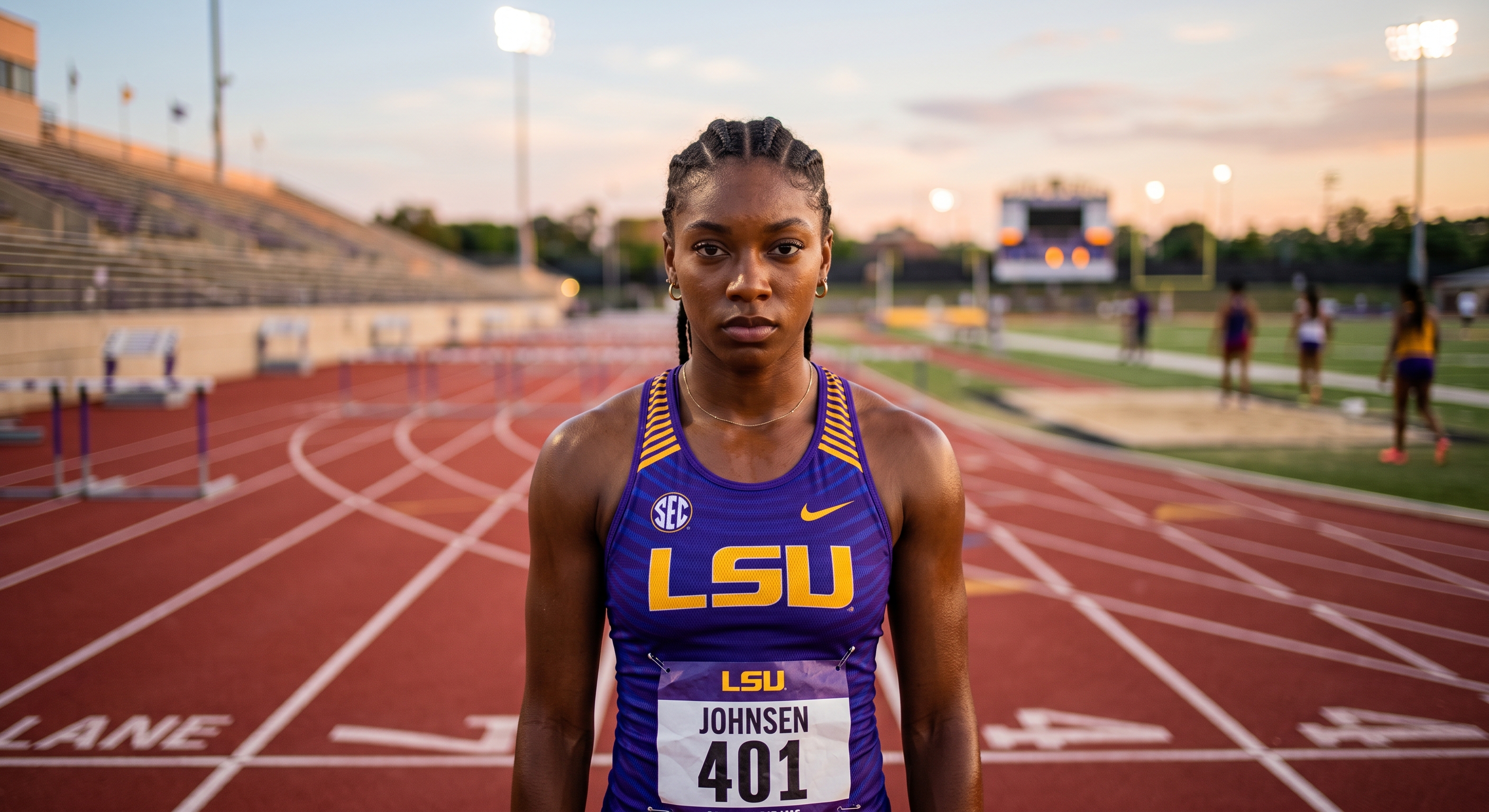
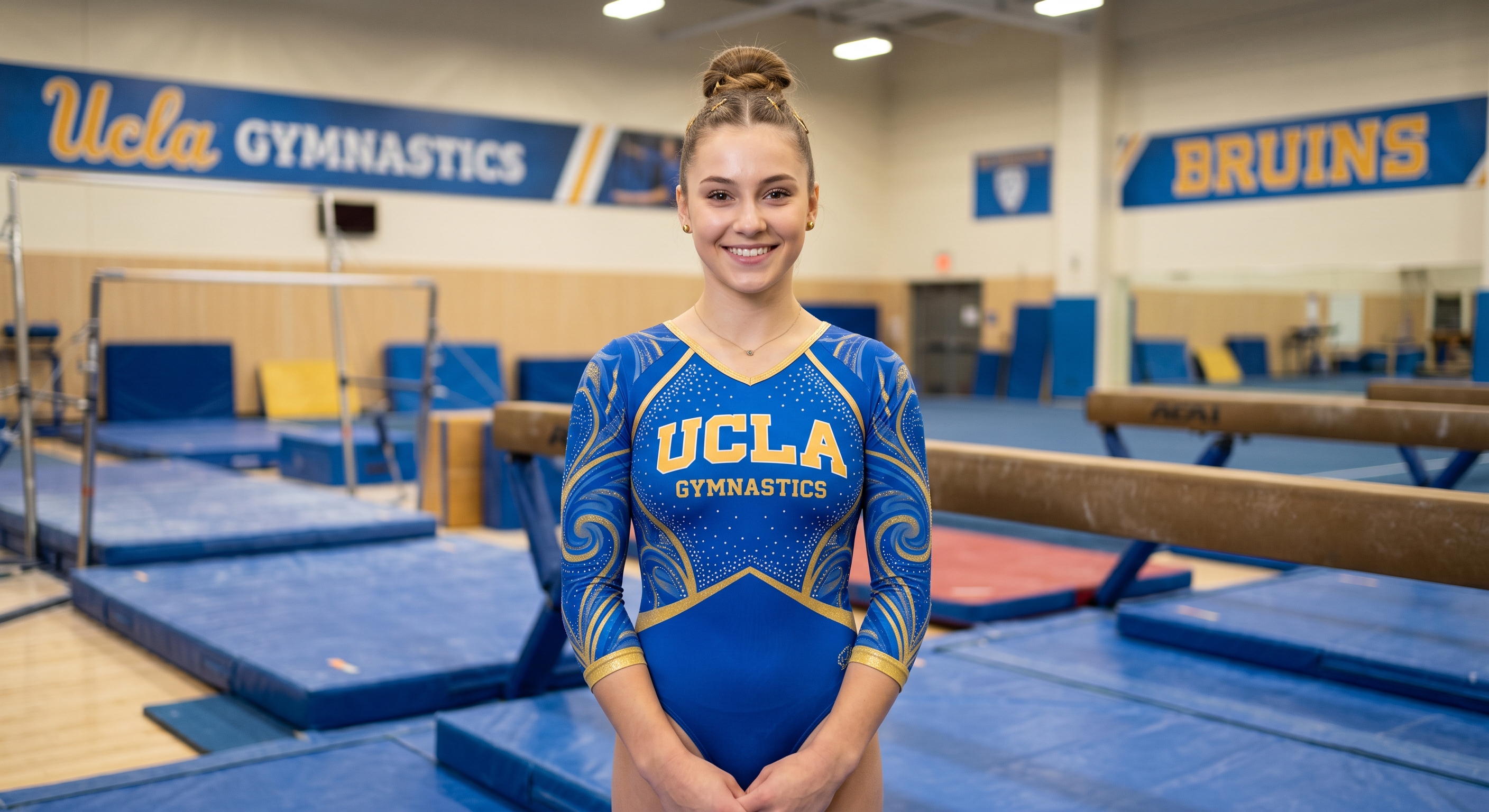
Three of four 4–5★ demo athletes are women in non-revenue sports — Maya Chen (Stanford soccer), Amara Johnson (LSU track), Sofia Petrov (UCLA gymnastics). The roster reflects empirical alignment with where demand growth and capital under-investment overlap most acutely. Not symbolic. Architectural.
Demand expands in four layers. Most athletes stop at Layer 1 — and the fundraising thesis still works. For local legends, Layers 2 and 3 activate. For breakthroughs, Layer 4 creates speculative liquidity that turns early Layer 1 cards into the rarest, most valuable editions. The perpetual royalty is what aligns incentives across all four.
Each candidate validated through founder-network conversations. Criteria fixed: (1) existing devoted fandom, (2) underserved by current card industry, (3) founder-level on-the-ground access. The sport matters less than depth.
Already media-trained. Existing GoFundMe donor bases that transition to cards. Predictable 4-year capital cycle that cards uniquely fund. Global from day one — a sprinter in Jamaica or a boxer in Senegal can attract global backers, bypassing local resource constraints. The clearest case of the platform thesis: world-class athletes the funding system overlooks.
Held for Phase 2 specifically because it requires international payment infrastructure and federation partnerships — work best done after Phase 1 proves the loop. Explicitly on the roadmap. The right CEO hire accelerates it.
We build with humility. The unknown unknown kills most startups. Here's everything that worries us, and the structural mitigation against each.
"What about the optics — 'isn't this just speculating on athletes?'"
Critics frame this as speculation. We frame it as aligned community capital. Every athlete on NextUp is an adult choosing to sell collectibles of her own career. Primary sales are fans backing an athlete they already follow; secondary royalties reward the early believers — the same dynamic that made Patreon, Strava, and Substack viable. We don't market cards as investments; we market them as proof of belief. One: the trading-card and exposure industries have profited off athlete faces for a century while the athletes saw nothing — we're the first platform where the athlete keeps the money. Two: the athlete sells her own thing and earns on every future trade, forever. That is the opposite of someone speculating on her.
"The people creating the value finally own the value." — that's the frame.
The athlete always earns more than we do. There are exactly two economic parties on every sale: the athlete and NextUp. Schools, teams, programs, federations, governing bodies, agents, and coaches receive zero share of any transaction. Schools and programs benefit indirectly — athletes earn income that can offset program fees, equipment, and travel — but that flow goes from athlete to school, never from platform to school. It's the principle every revenue line respects — written into the contracts, not the marketing copy.
NextUp launches 18+ for a reason: a pre-seed company cannot responsibly carry COPPA, Coogan, and parallel state minor-protection regimes while it is still building the platform. So we sequence. The launch market alone is a defensible business; each expansion layer is timed to the company's regulatory capacity, not its ambition.
Sequencing is founder discipline made visible: the regulatory burden grows in step with the company's capacity to carry it.
Ten slots across UFC, basketball, football, gymnastics, wrestling, track, volleyball, swimming, soccer, and baseball. One filling now. B/C-tier retired pros who came up the hard way, helping the ones coming up behind them — and earning as athletes on the platform themselves. Specific terms shared during diligence.
The questions we get asked — and the answers we have ready. Tap any question to expand. Filter by category.
Three compounding revenue streams.
Traditional marketplaces earn once per listing. We earn on every mint, every future resale for as long as the card exists, and every storefront transaction. Every athlete onboarded adds to three revenue bases simultaneously.
Year-1 blended primary GMV ~$600 per athlete — deliberately conservative — growing as cohorts mature, × 20% platform take. Edition capacity is rating-earned (Sport score + star tier, the Athlete Intelligence Engine), so supply scales with verified accomplishment, not hype. Secondary turn rate ramps from 0 in year 1 to 1.2× by year 5; the storefront layer stacks on top at a conservative 10% adoption assumption.
Headline pair: 5-year LTV per athlete ~$3,821 against ~$182 fully-burdened CAC — ~21× LTV/CAC. Full derivation, stress cases, and the marketing-only CAC view are walked through in our diligence materials.
The honest answer: the value is in the journey, not the destination. Conventional analysis asks "will this athlete go pro?" — that's the wrong question.
An athletic career is a sequence of discrete, verifiable events. First college start. First conference title. First All-American honor. A draft declaration. A pro debut. Each event activates a new pool of collectors. A fan doesn't buy a card betting on a contract — she buys it because she was there, and the card proves it. None of these moments require going pro.
Jerry Rice spent years at a Division I-AA school before the NFL noticed. Brady was the 199th pick. The community always sees it first. We're the first mechanism that makes that community belief economically meaningful — and for the athlete, who keeps 80%, it's real income while she's still competing.
No. Cards appreciate from the athlete's own performance, not from platform managerial efforts — consistent with the SEC/CFTC joint interpretive guidance of March 17, 2026 (Release No. 33-11412), which classifies digital collectibles deriving value from cultural and collectible significance as non-securities. We don't promise returns. We don't market cards as investments. No "index" products, no fractionalization, no portfolios of athletes. Each card is the individual collectible of an individual athlete.
Securities and NIL counsel are engaged now — a specialist outside-counsel retainer covering securities, 50-state NIL, and IP — and counsel has confirmed the structural position: NextUp is marketplace infrastructure facilitating first-party commerce. The seed round itself is a Reg A+ Tier 2 community offering, run with securities counsel through SEC qualification — regulatory engagement is the plan, not a contingency.
Not at launch. NextUp is an 18+ adult platform. Every athlete completes an adult identity check at signup, and identity is verified on both the buyer and athlete sides.
Minor athletes are a deliberate Y3-Y5 expansion category — not an abandoned market. A pre-seed or seed-stage company cannot responsibly carry COPPA, California Coogan, and parallel state minor-protection regimes at the same time as building the platform. A more mature company can. We sequence minors in once the regulatory infrastructure to serve them properly is in place. See the Sequenced Expansion section above for the staged rollout.
Cards remain valid and tradable — exactly like cards of athletes who retired or never went pro. The athlete still earns the 10% royalty on future resales. No refunds, just like there's no refund if a Topps rookie subject quits baseball. Disclosed clearly at point of sale.
Misconduct: the card remains valid unless a court orders otherwise; we cooperate with any legal directive. The athlete is the verified account holder of record, so ownership and payout questions have a clear answer.
Top Shot and Sorare are licensed content plays — they pay pro leagues for rights and sell digital moments to fans. One-to-many licensing.
We're a platform where athletes themselves mint their own cards — many-to-many creator economy. They serve a roster of marquee pros via a license. We serve every overlooked athlete — college rosters, developmental and regional pros, combat and individual sports — directly. Different business, different unit economics, different defensibility.
NIL collectives pool booster money and distribute it to athletes at one school in exchange for promotional obligations. The athlete is paid a lump sum and signs over NIL rights for the deal period.
We do the opposite. The athlete retains full NIL rights and monetizes directly via cards they own and issue themselves. NIL collectives serve only D1 football and basketball. We serve every sport, every level.
No. We're a sports collectibles company built on blockchain rails. The distinction matters. A crypto company orients product, hiring, and culture around crypto users — wallets, tokens, governance, on-chain volume metrics. We orient ours around real people: athletes capturing the value of their own following.
Crypto is a problem-solving technology. The 2022–23 NFT collapse happened because most projects were crypto-first — token launches looking for problems. We are the inverse: we identified a structural problem (the Mantle Injustice; a $15B trading-card industry that has profited off athlete faces for a century while the athletes earned nothing) and built the solution that requires blockchain rails to exist.
Top of stack: the $15B global sports trading-card market is the closest analog. But our TAM is arguably bigger — we serve sports and athletes the card industry has never touched: women's college sports, gymnastics, volleyball, track, combat, and individual sports.
The serviceable universe is the roughly one million US 18+ athletes in our target sports, inside a global pool of an estimated 10M+ adult athletes with a monetizable fan community. Minor athletes and international are sequenced expansion layers, not the launch market. Year-5 SAM and the full TAM build walk through in the financial model.
This is our most important question and we take it seriously. Start with the structure: every athlete on NextUp is an adult, selling collectibles of her own career, by her own choice. This is first-party commerce — the athlete is the seller, not the product.
On framing: the trading-card, ranking, and exposure industries have commercialized athletes for a century — and the athletes saw none of it. We're not introducing commercialization. We're introducing economic participation, so the athlete captures the value of her own following instead of a platform extracting it.
Counter-frame — the athlete keeps the money: A regional fighter who raises $3,000 in card sales has covered the cost of her next fight camp. A college track athlete who raises $2,000 has covered a season of travel. Today that money goes to no one connected to the athlete. We route it to her. That is the opposite of exploitation.
We design against this. Annual card issuance is capped. We don't publish athlete earnings leaderboards or financial totals. An athlete controls what moments she mints and what she shares — the platform never requires personal content. When an athlete stops playing, no clawback, no penalty — existing cards continue to trade, royalties continue accruing. Pausing issuance costs the athlete nothing.
The collectible is a moment from her career — a start, a title, a milestone — not a lifestyle feed. The product is built so an athlete can earn without performing her private life.
The right analogy isn't Wall Street. It's venture capital — democratized. Peter Thiel's $500K into Facebook became $1B because he was there first. By the time the public can buy at IPO, the biggest multiples are gone. That's by design. VC is gated.
Athletic careers follow the same trajectory, but the earliest believers have always been grandmothers, coaches, and neighbors. They were there first. They gave rides, encouragement, twenty-dollar bills. When those athletes became global brands, those communities got memories. We give them, for the first time, structural economic participation in what they helped create.
The first 100 are all hand-recruited — founder network, coach partnerships, college program and gym relationships in the beachhead sport. We're not running Facebook ads on day one. We're showing up at meets and events, talking to athletes and coaches, getting commitments to mint a first card before public launch. The first 100 are our most trusted evangelists. They tell the next 1,000.
Decided and built: Base (Coinbase's EVM L2). The contract suite is written — ERC-1155 collectibles, atomic 80/20 mint splits, marketplace royalty enforcement — with smart-wallet passkey onboarding via Base Account SDK + Coinbase Wallet and gas sponsored through Base Paymaster, so neither athletes nor fans ever touch ETH. Coinbase's fiat on-ramps and consumer reach make Base a strategic choice, not just a technical one.
Royalty enforcement is structural: cards trade only on the NextUp marketplace, so the athlete's 10% cannot be routed around. Third-party security audit is scheduled during the bridge phase, ahead of mainnet deployment.
No, and we have no current plans to. Platform runs on ERC-1155 editioned collectibles — one collectible series per athlete moment. No governance token, no utility token, no fungible. Adding one introduces regulatory complexity, distracts from consumer focus, and pulls us toward crypto-native culture instead of mainstream UX. None of those are good trades. Clean no.
Ten founding ambassadors — one or two per sport. "B/C-tier" pros: retired champions or active-but-not-A-list athletes with real brand and a real story about the hard road up. Think Rampage Jackson — nationally known, respected, relatable. Not LeBron, not Brady — their teams make pre-seed structurally impossible.
Each ambassador receives a combination of equity (vesting with cliff) and a referral fee on primary sales from athletes they endorse — that referral fee comes from our platform take, not the athlete's 80%. Pool size, vesting schedule, cliff length, and termination/clawback clauses are detailed in the cap-table memo available under NDA in the data room.
Strategic value: when a Series A fund sees 5–7 named athletes on the cap table, platform legitimacy compounds independently of our numbers. Athletes voting with their time and reputation = authentic signal.
Mickey Mantle's rookie card sold for $12.6 million. His family got zero.
We're building the platform where that never happens again — for every athlete, every sport, every community. The people creating the value finally own the value.
Raising $2M bridge (SAFE, $15M post-money cap). $10M Reg A+ Tier 2 community round planned for late 2027. Series A in 2028 — growth-acceleration option, not a survival requirement. Founding ambassador slots filling. Reach out for a walkthrough, the diligence packet, or to put time on the calendar.
Until then, you can email major@next-up-now.com or call (305) 587-5573.
Full financial model, cap-table memo, legal opinions on collectibles classification & minor compliance, cohort-adjusted appreciation ranges, and historical case studies — all available under NDA.
Email major@next-up-now.com with your name, firm, and investor type. NDA + data-room link will follow within 24 hours.